
Call us now :07313726424
 Send Inquiry
 Send Inquiry
In Place Machining of Damaged Intermediate Shaft Journal
Price 1700 INR/ Unit
MOQ : 1 Square Inch
In Place Machining of Damaged Intermediate Shaft Journal Specification
- Power Source
- Electric/hydraulic portable units
- Setup Time
- Reduced downtime, average setup within 2-5 hours
- Product
- In Place Machining of Damaged Intermediate Shaft Journal
- Journal Diameter Range
- Typically accommodates shaft journals from 100 mm to 1000 mm
- Material Compatibility
- Carbon steel, alloy steel, stainless steel
- Surface Finish After Machining
- Up to 0.2 Ra
- Machining Technique
- Portable machining, in-place journal turning and grinding
- Application
- Onsite repair and restoration of worn or damaged intermediate shaft journals
- Inspection
- Post-machining dimensional and surface finish inspection provided
- Operation Environment
- Suitable for marine, power plants, industrial onsite locations
- Tooling Type
- Specially designed portable cutting and grinding tools
- Machining Tolerance
- Up to 0.01 mm
- Safety Features
- Integrated safety interlocks, protective guards for onsite operation
- Service Availability
- 24/7 emergency response and planned maintenance contracts
In Place Machining of Damaged Intermediate Shaft Journal Trade Information
- Minimum Order Quantity
- 1 Square Inch
- Supply Ability
- 1 Square Inch Per Day
- Delivery Time
- 2-3 Days
About In Place Machining of Damaged Intermediate Shaft Journal
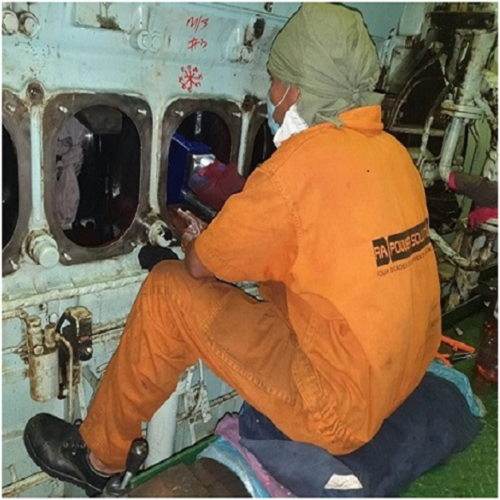
In place Machining of damaged intermediate shaft journal was executed successfully by RA Power Solutions at Kochi Port, India.
Details of Intermediate Shaft Repair
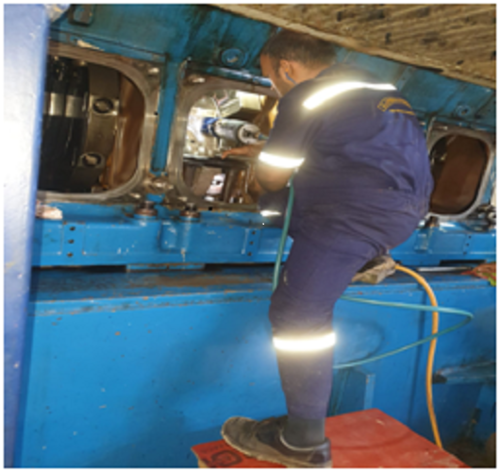
- Team of three technicians boarded the Vessel with the onsite grinding and polishing equipment.
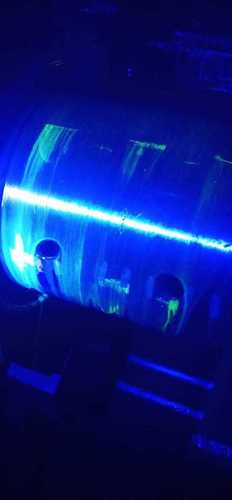
- On inspection the Intermediate Propeller Shaft bearing sitting diameter was found damaged with surface cracks, higher hardness, and ovality of 0.38MM.
- The bearing was found burnt and white metal removed, this bearing was immediately packed and sent to our factory for White Metal Rebabbitting to save the time.
- Machining, Grinding and Polishing of Intermediate Shaft Journal was undertaken, and diameter was reduced by 1.00MM, the final diameter of Intermediate Shaft Journal was maintained as 504.00 MM with the tolerance of only 0.02 MM and surface finish of less than 15 Ra value.
- The bearing after rebabbitting was machined, in the RA Power Solutions factory maintaining the bore size of 504.50 MM, as per the manual.
- Bearing was assembled, Blue matching was done and after checking of Oil-gap and all other major parameters the trials were taken and performance was found satisfactory.
Efficient Onsite Restoration
Our in place machining service enables quick and precise restoration of damaged intermediate shaft journals directly at your location. The portable machining method eliminates the need for disassembly and transportation, significantly reducing repair times and associated costs.
Precision Engineering for All Environments
We support a wide variety of industries including marine, power plants, and industrial facilities. Our specialized tooling and robust power sources allow for accurate machining in challenging onsite environments, ensuring optimal shaft performance and equipment reliability.
Comprehensive Quality Assurance
Our in place machining includes stringent post-machining inspections to verify both dimensional accuracy and surface finish. Coupled with integrated safety systems and trained personnel, our service guarantees consistent quality and operational safety every time.
FAQ's of In Place Machining of Damaged Intermediate Shaft Journal:
Q: How is in place machining of a damaged intermediate shaft journal performed onsite?
A: In place machining is carried out using specially designed portable cutting and grinding tools, which are mounted directly onto the shaft at your facility. This process allows for turning and grinding of shaft journals without the need for removal, significantly shortening repair time and minimizing downtime.Q: What types of shaft journal materials can be machined with your onsite service?
A: Our portable machining service is compatible with carbon steel, alloy steel, and stainless steel shaft journals, ensuring versatility across various industrial applications.Q: When can I schedule onsite shaft journal machining, and is emergency service available?
A: We offer both 24/7 emergency response and planned maintenance contracts. You can schedule our onsite machining services any time, ensuring coverage for both urgent repairs and routine restoration needs.Q: Where is your in place machining service available?
A: Our onsite repair services are offered across India, catering to marine vessels, power plants, and industrial facilities in both urban and remote locations.Q: What is the typical machining tolerance and surface finish achieved after onsite repair?
A: Our process achieves a machining tolerance of up to 0.01 mm and delivers a surface finish as fine as 0.2 Ra, ensuring high quality and reliable shaft operation.Q: How long does it take to set up the in place machining equipment onsite?
A: Upon arrival, our team completes the machinery setup within 2 to 5 hours, enabling quick commencement of repairs and reducing overall equipment downtime.Q: What safety measures and post-machining inspections are included in your service?
A: Safety is prioritized with integrated safety interlocks, protective guards, and adherence to onsite protocols. Dimensional and surface finish inspections are conducted post-machining to verify compliance with specifications and ensure quality.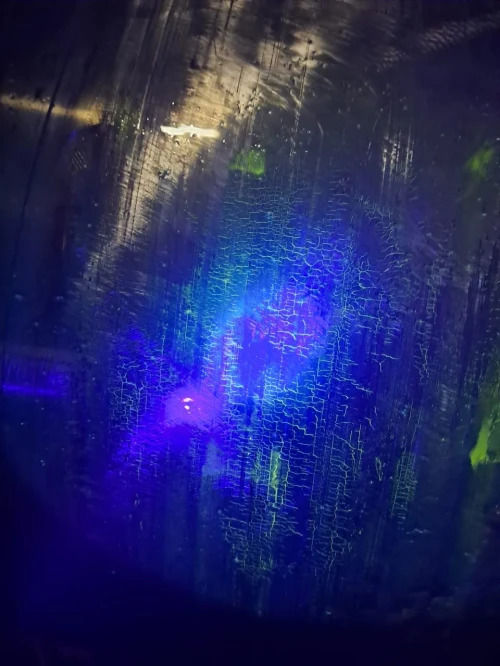


Tell us about your requirement

Price:
Quantity
Select Unit
- 50
- 100
- 200
- 250
- 500
- 1000+
Additional detail
Mobile number
Email

More Products in Crankshaft Repair Category
Wartsila Engine Model no. 6R32, 4R32, 8R32, 9R32, 12V32LN, 16V32D, 16V32LN, W16V32, W18V32 Crankpin Repair | Crankshaft Grinding Onsite
Price 5000 INR / Square Inch
Minimum Order Quantity : 1 Square Inch
Allen Engine PVBCS12 F Crankshaft Repair in Gambia
Price 1500 INR / Square Inch
Minimum Order Quantity : 1 Square Inch
Daihatsu DK20 Crankshaft Machining on site is possible
Price 1500 INR / Square Inch
Minimum Order Quantity : 1 Square Inch

 Send Inquiry


Our Products

Corporate Office : 411, 4th Floor, Unitech Arcadia, South City II, Gurugram - 122018, Haryana, India
Catalog Brochure 
Works and Training Centre
Plot No. 235, Sector-7, IMT Manesar, Gurgaon-122050 (India)
Research and Design Centre
425, 4th Floor, Vipul Business Park, Sector-48, Sohna Road Gurgaon-122018 (India)
Exports and International Division
523, 5th Floor, Tower-B4, Spaze I-Tech Park, Sohna Road Gurgaon-122018 (India)

Mr RA Power
(Managing Director)
Mobile :07313726424
 Send Inquiry
 Send SMS
Developed and Managed by Infocom Network Private Limited.
