Call us now :07313726424
 Send Inquiry
 Send Inquiry
Trimetal Bearing
Price 200000.0 INR/ Piece
MOQ : 10 Pieces
Trimetal Bearing Specification
- Precision Rating
- P6
- Retainer
- Steel
- Lubrication Type
- Other
- Cage Material
- Steel
- Inside Diameter
- 35 mm Centimeter (cm)
- Thickness
- 6 mm Micrometers (um)
- Bearing Type
- Other
- Material
- Other
- Structure
- Split
- Seals Type
- Open
- Number Of Rows
- Single Row
- Bore Size
- Customized
- Outside Diameter
- 70 mm Meter (m)
- Limiting Speed
- 6500 RPM mm/m
- Load Capacity
- High Kilograms (kg)
- Surface Finish
- Polished
- Feature
- Anti-Friction, Durable
- Corrosion Resistance
- Yes
- Shape
- Round
- Packaging Type
- Box
- Tolerance
- 0.01 mm
- Temperature Range
- -20C to 200C
- Hardness
- 60 HRC
Trimetal Bearing Trade Information
- Minimum Order Quantity
- 10 Pieces
- Supply Ability
- 1 Piece Per Day
- Delivery Time
- 15 Days
About Trimetal Bearing
Tri Metal Bearings for crank pin and main journal of all make and model of Diesel engine, Compressor, pumps are available. We have the facility to manufacture Tri metal bearings for different applications as per drawing or a sample provided by the client.
Since we are the leaders in onsite repair of the crankshaft of main and auxiliary engines up to 700mm diameter. We also develop and manufacture a special size and under size Tri metal bearings. The bearing of white metal and Bi metal are also manufactured.
Designed for Demanding Applications
Our Trimetal Bearings are specifically crafted to serve the rigorous requirements of automotive, industrial engines, and compressors. The robust combination of steel, copper, and lead bronze ensures dependable performance, resistance to corrosion, and resilience under heavy loads. Each bearing meets high precision and surface finish standards, resulting in increased efficiency and lifespan in demanding machinery.
Quality and Precision You Can Trust
Every bearing is manufactured under strict quality protocols, boasting a tolerance of 0.01 mm and a hardness of 60 HRC. The polished surface and P6 precision rating facilitate optimal performance even at high speeds up to 6500 RPM. Open seals design and oil lubrication contribute to reduced friction and enhanced durability for long-term use.
FAQ's of Trimetal Bearing:
Q: How is a trimetal bearing utilized in automotive and industrial engines?
A: Trimetal bearings are commonly used to support rotating shafts in automotive and industrial engines, offering excellent load-bearing capacity, low friction, and reliable performance over prolonged use. Their robust construction makes them suitable for high-stress environments with consistent heavy-duty cycles.Q: What is the process for installing a trimetal bearing with a 35 mm bore size?
A: Installation involves ensuring the housing and shaft are clean, checking alignment, applying oil-based lubrication, and carefully fitting the bearing into place. Given its 0.01 mm tolerance, proper installation minimizes wear and guarantees optimal function.Q: When is it recommended to replace a trimetal bearing in compressors or engines?
A: It is best to replace the bearing if you notice unusual noise, increased vibration, or a decline in equipment performance. Regular inspection after heavy usage or as part of scheduled maintenance helps detect early signs of wear or damage.Q: Where can your trimetal bearings be applied besides automotive and compressors?
A: Apart from automotive and compressors, these bearings are suitable for use in heavy-duty industrial machinery, generator sets, and certain types of hydraulic equipment where high loads and precise tolerances are needed.Q: What are the benefits of using a trimetal bearing with a 60 HRC hardness and corrosion resistance?
A: A 60 HRC hardness ensures the bearing is highly wear-resistant and durable, extending service life under tough conditions. Corrosion resistance protects the bearing in harsh or varying environmental conditions, reducing maintenance and downtime.Q: How does the anti-friction, polished surface improve bearing performance?
A: The polished, anti-friction surface reduces mechanical resistance between moving parts, which minimizes heat generation, decreases energy loss, and ultimately leads to smoother operation and longer bearing life.Q: What role does oil lubrication and an open seal type play in the bearing's operation?
A: Oil lubrication ensures continuous reduction of friction and effective heat dissipation, while the open seal type allows for easy inspection and maintenance. Together, these features support sustained high-speed operation and reliability.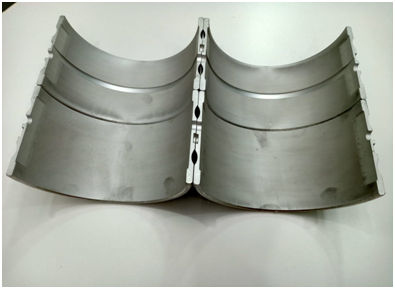
Tell us about your requirement

Price:
Quantity
Select Unit
- 50
- 100
- 200
- 250
- 500
- 1000+
Additional detail
Mobile number
Email

More Products in White Metal Bearing Category
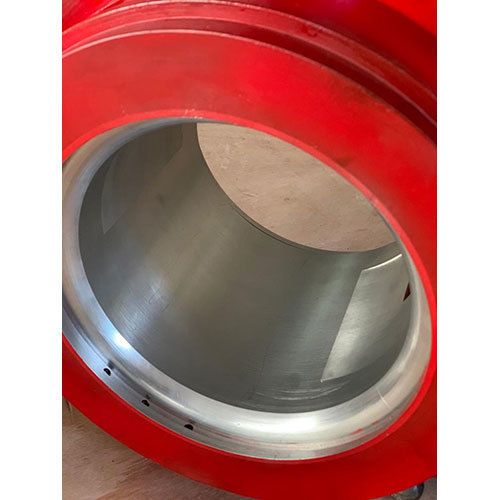
Babbitt White Metal Bearing
Price 10000 INR / Piece
Minimum Order Quantity : 10 Pieces
Material : Other, Babbitt White Metal
Load Capacity : High
Thickness : 15 mm
Bore Size : 50 mm
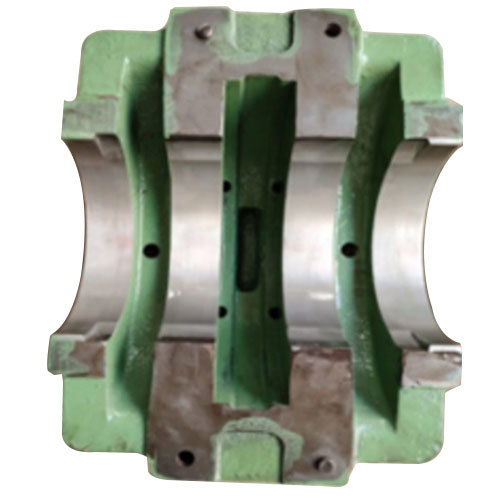
Babbitt Bearing
Price 10000 INR / Piece
Minimum Order Quantity : 10 Pieces, Piece
Material : Other, Babbitt Metal (Lead or Tin Based Alloy)
Load Capacity : Heavy Duty
Thickness : Varies as per dimension
Bore Size : Customizable as per requirement
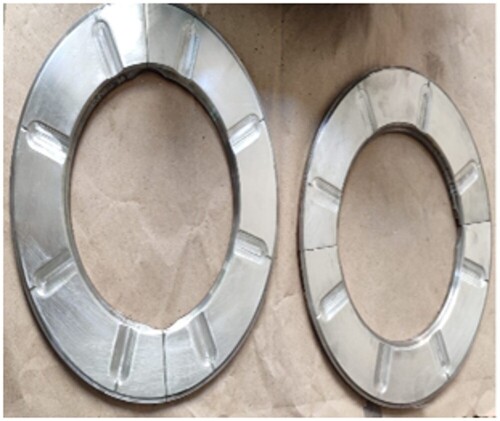
Rebabbitting of White Metal Bearings Manufacturer For 43 Years
Price 16000 USD ($) / Number
Minimum Order Quantity : 1 Number
Material : Other, HighGrade White Metal (Babbitt) Alloy
Load Capacity : Designed as per application
Thickness : Adjustable, typically from 3 mm up
Bore Size : Custom as per OEM/Client Specs
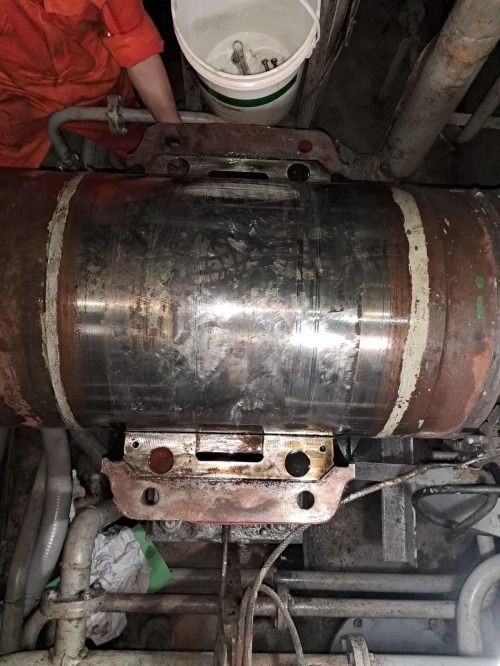
Intermediate Shaft Repair and Rebabbitting of Intermediate Shaft Bearing
Price 6000.0 USD ($) / Piece
Minimum Order Quantity : 1 Piece
Material : Other, Steel body with highgrade white metal (Babbitt) lining
Load Capacity : High radial load
Thickness : As per requirement
Bore Size : Custom sizes available

 Send Inquiry


Our Products

Corporate Office : 411, 4th Floor, Unitech Arcadia, South City II, Gurugram - 122018, Haryana, India
Catalog Brochure 
Works and Training Centre
Plot No. 235, Sector-7, IMT Manesar, Gurgaon-122050 (India)
Research and Design Centre
425, 4th Floor, Vipul Business Park, Sector-48, Sohna Road Gurgaon-122018 (India)
Exports and International Division
523, 5th Floor, Tower-B4, Spaze I-Tech Park, Sohna Road Gurgaon-122018 (India)

Mr RA Power
(Managing Director)
Mobile :07313726424
 Send Inquiry
 Send SMS
Developed and Managed by Infocom Network Private Limited.
